
Great Pyramid of Giza
10 Amazing Secrets of the Great Pyramid of Giza: The Ultimate Guide
The Great Pyramid of Giza is one of the most extraordinary monuments ever created. Built more than 4,500 years ago during Egypt’s Old Kingdom, this enormous structure continues to attract historians, archaeologists, engineers, and travelers from around the world. Despite centuries of research, many questions about its construction, purpose, and remarkable design continue to fascinate visitors.
Located on the Giza Plateau near Cairo, the pyramid was built for Pharaoh Khufu, also known by his Greek name Cheops. It was originally covered with smooth limestone casing stones that created a brilliant white surface. Although much of that outer covering disappeared over the centuries, the monument remains an extraordinary example of ancient Egyptian engineering.
This guide explores 10 amazing secrets of the Great Pyramid of Giza, including its construction, internal chambers, astronomical alignment, original appearance, and the discoveries that continue to make it one of Egypt’s greatest historical attractions.
Why Is the Great Pyramid of Giza So Important?
The Great Pyramid of Giza is the largest of the three main pyramids on the Giza Plateau. It was constructed during the reign of Pharaoh Khufu, probably around the 26th century BC.
For thousands of years, it was the tallest human-made structure in the world. Its enormous dimensions and precise construction demonstrate the organizational ability of Ancient Egyptian society.
The pyramid was part of a larger funerary complex that included temples, causeways, smaller pyramids, and other structures connected with the royal burial traditions of the Old Kingdom.
Today, the monument remains one of Egypt’s most important tourist attractions and one of the most recognizable symbols of Ancient Egypt.
1. The Great Pyramid Was Built for Pharaoh Khufu
The first major secret is connected with the identity of the pyramid’s owner.
The monument was constructed as the tomb of Pharaoh Khufu, the second pharaoh of Egypt’s Fourth Dynasty. Khufu ruled during the Old Kingdom, a period famous for enormous pyramid-building projects.
Evidence linking the pyramid to Khufu includes inscriptions found in internal areas of the monument. Archaeological discoveries around the Giza complex also provide valuable information about the workers and administration responsible for the construction project.
Although later traditions created many myths about the pyramid, archaeological evidence strongly connects it with Khufu’s royal funerary complex.
2. The Great Pyramid Was Once Covered in White Limestone
The pyramid that visitors see today looks very different from its original appearance.
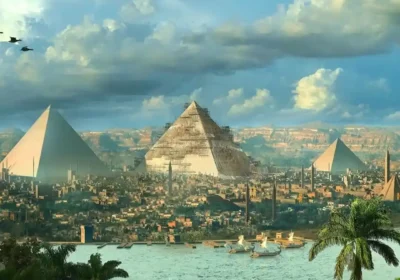
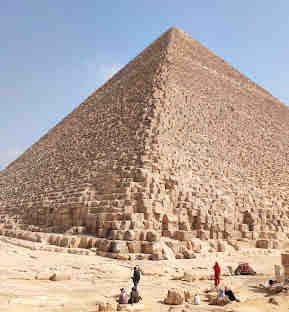
The Great Pyramid of Giza was originally covered with highly polished Tura limestone casing stones. These smooth blocks would have reflected sunlight, giving the monument a bright and impressive appearance.
Most of the casing stones disappeared over many centuries because of natural erosion, reuse, and human activity.
Only parts of the original casing remain in limited areas, allowing archaeologists to understand how dramatically the pyramid’s appearance has changed since antiquity.
3. Its Construction Required Extraordinary Organization
How the ancient Egyptians built such an enormous structure remains one of the most fascinating questions surrounding the Great Pyramid of Giza.
The pyramid contains millions of stone blocks. Some blocks are relatively small, while others weigh many tons.
Building the monument required enormous quantities of materials, transportation systems, skilled workers, engineers, craftsmen, administrators, food supplies, and planning.
Modern archaeological evidence suggests that the project was supported by an organized workforce rather than the popular image of huge numbers of slaves building the monument.
Workers lived in organized settlements near the Giza Plateau. Excavations have revealed evidence of bakeries, workshops, storage areas, and other facilities that supported the construction workforce.
4. The Pyramid Has Remarkable Astronomical Alignment
One of the most impressive characteristics of the Great Pyramid of Giza is its orientation.
The pyramid’s sides are aligned remarkably closely with the four cardinal directions: north, south, east, and west.
Ancient Egyptian builders achieved this remarkable precision without modern surveying equipment.
The exact methods remain debated, but the alignment demonstrates the sophisticated astronomical and mathematical knowledge available to ancient Egyptian architects.
This relationship between architecture and the sky was especially meaningful in Egyptian religion, where celestial bodies played an important role in beliefs about the afterlife.
5. The Pyramid Contains Several Important Chambers
Inside the pyramid are several famous spaces, including the King’s Chamber, the Grand Gallery, and the Queen’s Chamber.
The King’s Chamber is located deep inside the monument and was constructed from large granite blocks.
The Grand Gallery is one of the pyramid’s most impressive internal architectural features. It is a long, high corridor with a distinctive corbelled design.
The exact function of every internal space remains an important subject of archaeological research.
6. Hidden Spaces Continue to Fascinate Researchers
Modern technology has revealed that the Great Pyramid of Giza contains previously unknown internal spaces.
Scientists have used non-invasive techniques such as muon radiography to investigate areas that cannot easily be reached through conventional archaeological exploration.
These studies have identified large voids and structures whose exact purpose remains under investigation.
Such discoveries demonstrate that even after centuries of study, the pyramid can still provide new information.
7. The Pyramid Was Part of a Larger Complex
The pyramid should not be viewed as an isolated monument.
The original funerary complex included a valley temple, a mortuary temple, a long causeway, and other structures connected with royal funerary rituals.
There were also smaller pyramids associated with the royal family.
Understanding the complete complex provides a better picture of how the ancient Egyptians organized royal burial ceremonies and religious traditions.
8. The Great Pyramid Was Originally Much Taller
The monument has lost some of its original height over thousands of years.
When completed, the Great Pyramid of Giza stood at approximately 146.6 meters. Today, it is approximately 138.5 meters high.
The missing height is partly related to the loss of the original uppermost section and changes to the pyramid’s exterior over time.
Despite this reduction, its enormous scale remains impressive when viewed from the Giza Plateau.
9. It Was the Oldest of the Seven Wonders
The Great Pyramid of Giza is the only surviving monument among the traditional Seven Wonders of the Ancient World.
The other six wonders disappeared through earthquakes, fires, destruction, or the passage of time.
The survival of the pyramid for more than four millennia is extraordinary. It has witnessed the rise and fall of kingdoms, foreign invasions, changes in religion, and the development of modern civilization.
Its survival is one of the reasons the monument remains such a powerful symbol of human achievement.
10. The Pyramid Still Holds Unanswered Questions
Despite extensive research, several mysteries surrounding the Great Pyramid of Giza remain.
Researchers continue to study how the heaviest stones were transported, how the pyramid was surveyed so accurately, how certain internal structures were designed, and how the ancient builders organized the enormous construction project.
These questions have encouraged generations of archaeological research.
However, the mystery should not overshadow what is already known. Archaeological evidence provides substantial information about the pyramid’s construction, purpose, workers, and historical context.
The Great Pyramid and the Giza Plateau
The Great Pyramid of Giza forms part of a remarkable archaeological landscape.
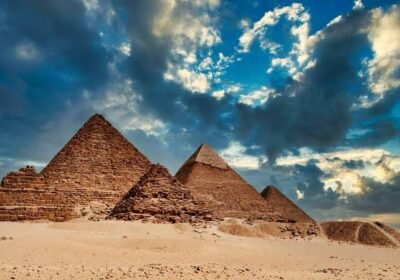
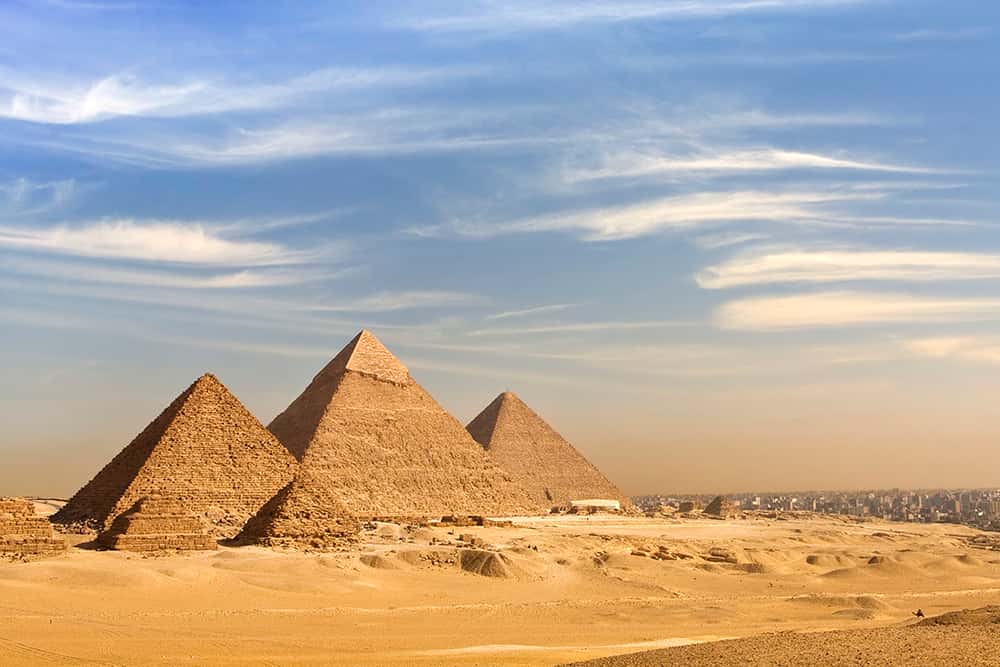
Visitors can explore the pyramids of Khufu, Khafre, and Menkaure, along with the Great Sphinx and other structures associated with the ancient necropolis.
The Pyramid of Khafre is particularly recognizable because some of its original casing stones remain near the top.
The Great Sphinx, meanwhile, stands nearby and remains one of Egypt’s most famous monuments.
Together, these structures reveal the scale and ambition of the royal building projects undertaken during the Fourth Dynasty.
Best Time to Visit the Great Pyramid of Giza
The cooler months from approximately October through April are generally more comfortable for exploring the Giza Plateau.
Early morning is an excellent time for sightseeing because temperatures are usually more pleasant and the light can be ideal for photography.
Visitors should wear comfortable shoes, carry water, and use sun protection because much of the archaeological area is exposed to the sun.
How to Make the Most of Your Visit
Allow enough time to explore the entire Giza Plateau rather than visiting only the main pyramid.
A well-planned visit can include:
- The Great Pyramid of Khufu
- Pyramid of Khafre
- Pyramid of Menkaure
- Great Sphinx
- Ancient funerary structures
- Viewpoints across the Giza Plateau
- Nearby archaeological attractions
A professional Egyptologist or qualified guide can also add valuable historical context by explaining the pyramid’s architecture, religious purpose, and connection with the Old Kingdom.
Frequently Asked Questions
Who built the Great Pyramid of Giza?
The pyramid was built for Pharaoh Khufu during Egypt’s Fourth Dynasty. Archaeological evidence indicates that a large, organized workforce of skilled laborers and supporting workers participated in the project.
How old is the Great Pyramid of Giza?
The pyramid was constructed more than 4,500 years ago, during the 26th century BC.
Why was the Great Pyramid built?
The pyramid was constructed as part of Pharaoh Khufu’s royal funerary complex and was connected with ancient Egyptian beliefs about kingship and the afterlife.
How tall was the Great Pyramid originally?
It originally stood at approximately 146.6 meters. Today, it is approximately 138.5 meters high.
Can visitors enter the Great Pyramid?
Visitors can enter designated internal areas when access is available. Entry arrangements and restrictions can vary, so travelers should check current visitor information before their trip.
Is the Great Pyramid the oldest of the Seven Wonders?
It is the oldest of the traditional Seven Wonders of the Ancient World and the only one that survives substantially intact.
Conclusion
The Great Pyramid of Giza is far more than an enormous stone monument. It represents the engineering knowledge, religious beliefs, political organization, and extraordinary ambition of Ancient Egyptian civilization.
From its remarkable astronomical alignment and enormous internal chambers to the mysteries revealed by modern technology, the pyramid continues to inspire new research and discoveries.
For travelers exploring Egypt’s historical heritage, standing before the pyramid provides a direct connection with a civilization that flourished thousands of years ago. Combined with the Great Sphinx, the other Giza pyramids, museums, and nearby archaeological sites, the Giza Plateau offers one of the world’s most unforgettable historical experiences.
The greatest secret of the Great Pyramid of Giza may be that, despite more than four thousand years of history and centuries of investigation, it still has more stories to reveal.