


Facts About King Tut: 10 Incredible Royal Secrets
Uncovering the most compelling facts about King Tut provides an astonishing look into ancient Egypt’s royal heritage. Historians continue to study his life because his story captivates travelers and archaeologists across the globe. In fact, his intact burial chamber revolutionized our modern understanding of New Kingdom burial rituals. You can uncover more royal narratives in our guide on Who Was King Tutankhamun? 10 Fascinating Facts About Egypt’s Boy King.
Fascinating Historical Facts About King Tut
Tutankhamun ascended the throne around the young age of nine. Therefore, advisors and high officials heavily influenced his early political decisions. In addition, his original birth name was Tutankhaten, reflecting his father Akhenaten’s worship of the sun disc Aten. However, the royal court later restored traditional religious practices and reinstated Amun as the supreme deity.
Consequently, the young pharaoh changed his name to honor Amun and solidify the religious restoration. In fact, these this experience reveal how quickly religious tensions shifted during the Eighteenth Dynasty. For example, royal scribes repaired ancient shrines that had suffered damage during the Amarna period. Furthermore, the court moved Egypt’s capital back to Thebes to regain support from the powerful priesthood.
Royal Lineage and Untold Facts About King Tut
Archaeologists have spent decades analyzing the pharaoh’s royal lineage through DNA and historical records. For example, comprehensive testing confirms Akhenaten was his biological father. Moreover, modern genetic research demonstrates that his mother was his father’s sister, a common royal custom intended to protect pure bloodlines. According to historical records on Tutankhamun, these incestuous marriages often caused debilitating genetic conditions in royal offspring.
As a result, ancient records and anatomical research provide sobering facts about King Tut and his fragile health. Furthermore, he married his half-sister Ankhesenamun to reinforce his dynastic claim. Nevertheless, the young royal couple tragically lost two daughters in infancy. In fact, embalmers lovingly placed the mummified fetuses in the king’s burial chamber to accompany him into eternity.
The Golden Tomb and Archaeological Revelations
British archaeologist Howard Carter discovered the nearly intact royal tomb in November 1922. Therefore, this stunning discovery in the Valley of the Kings made headlines worldwide. Travelers eager to see these archaeological wonders often explore Best Places to Visit in Luxor: 15 Amazing Historical Sites. In addition, detailed excavation reports documented by KV62 highlight the sheer volume of treasures packed into four modest chambers.
Interestingly, essential facts about King Tut emphasize that his tomb was unusually compact for a reigning monarch. Consequently, Egyptologists believe his sudden death forced priests to use an unfinished tomb originally planned for someone else. Furthermore, artisans had only seventy days to prepare the burial equipment and paint the plaster walls. Meanwhile, more than five thousand precious artifacts were carefully placed inside the subterranean chambers.
Health, Physical Mysteries, and Vital Facts About King Tut
CT scans and medical investigations have shed new light on the king’s actual physical appearance. In fact, researchers revealed that the young monarch suffered from a severe clubfoot and required walking canes. For example, excavators uncovered more than one hundred ornate walking sticks inside his tomb. Moreover, these orthopedic details provide crucial facts about King Tut and his day-to-day lifestyle.
Nevertheless, rumors of a violent murder persisted for decades throughout the twentieth century. In contrast, recent computed tomography scans found no evidence of a fatal blow to the back of the skull. Therefore, scholars now emphasize that severe malaria combined with an infected broken leg likely caused his early death. Additionally, historians studying The Ultimate Egypt Travel Guide for History Lovers: 7 Incredible Historical Experiences will appreciate how medical science continues to solve ancient historical riddles.
The Boy King’s Global Legacy Today
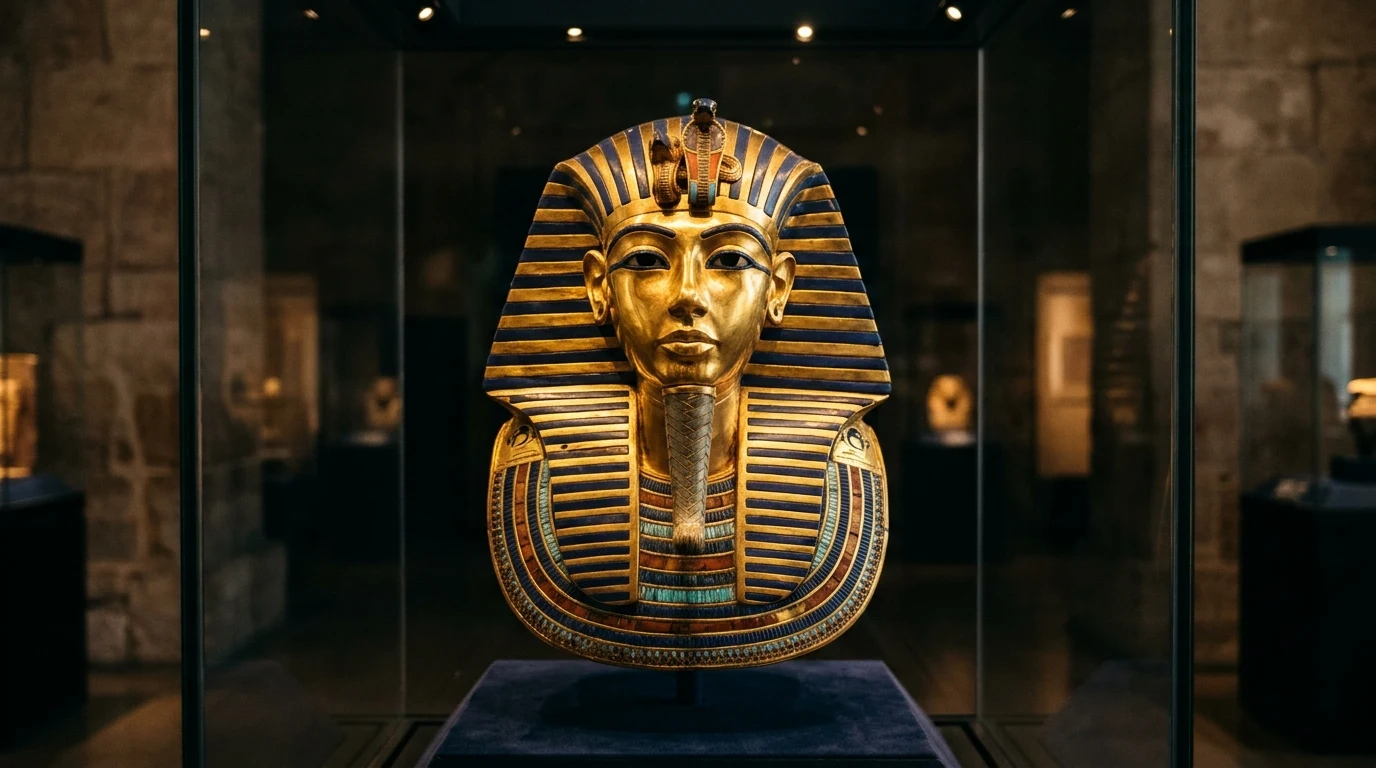
The iconic golden funeral mask remains one of the most recognized works of art on Earth. Crafted from solid gold and inlaid with semiprecious stones, it showcases extraordinary artisan mastery. In addition, mysterious facts about King Tut include a celestial dagger found tucked inside his mummy wrappings. Furthermore, modern metallurgical tests confirmed that the blade was forged from an ancient iron meteorite.
Consequently, this celestial artifact illustrates the advanced craftsmanship of ancient Egyptian blacksmiths. In fact, King Tut ruled for only ten short years before his unexpected death around age nineteen. However, his modest reign achieved worldwide immortality because grave robbers missed his hidden burial staircase. In contrast, grander pharaohs suffered looting in antiquity, leaving their memory preserved primarily through empty monuments across Historical Places in Egypt.
Essential Facts About King Tut for Travelers
Travelers planning a journey to Egypt can witness these timeless treasures firsthand. For example, the magnificent mummy still rests inside its climate-controlled glass case within tomb KV62 in Luxor. Meanwhile, Cairo’s Grand Egyptian Museum houses the complete collection of five thousand royal grave goods for public display. Therefore, history enthusiasts can admire the golden thrones, ornate chariots, and royal jewelry in magnificent exhibition halls.
Finally, learning these foundational facts about King Tut enriches any cultural expedition to the Nile Valley. Egypt Voyagers delivers customized itineraries that bring ancient Egyptian history to life with expert local guides. In addition, private transfers and bespoke tours allow you to explore ancient temples at a comfortable, relaxing pace.