Egypt Ancient Civilization: 9 Incredible Secrets of the Pharaohs
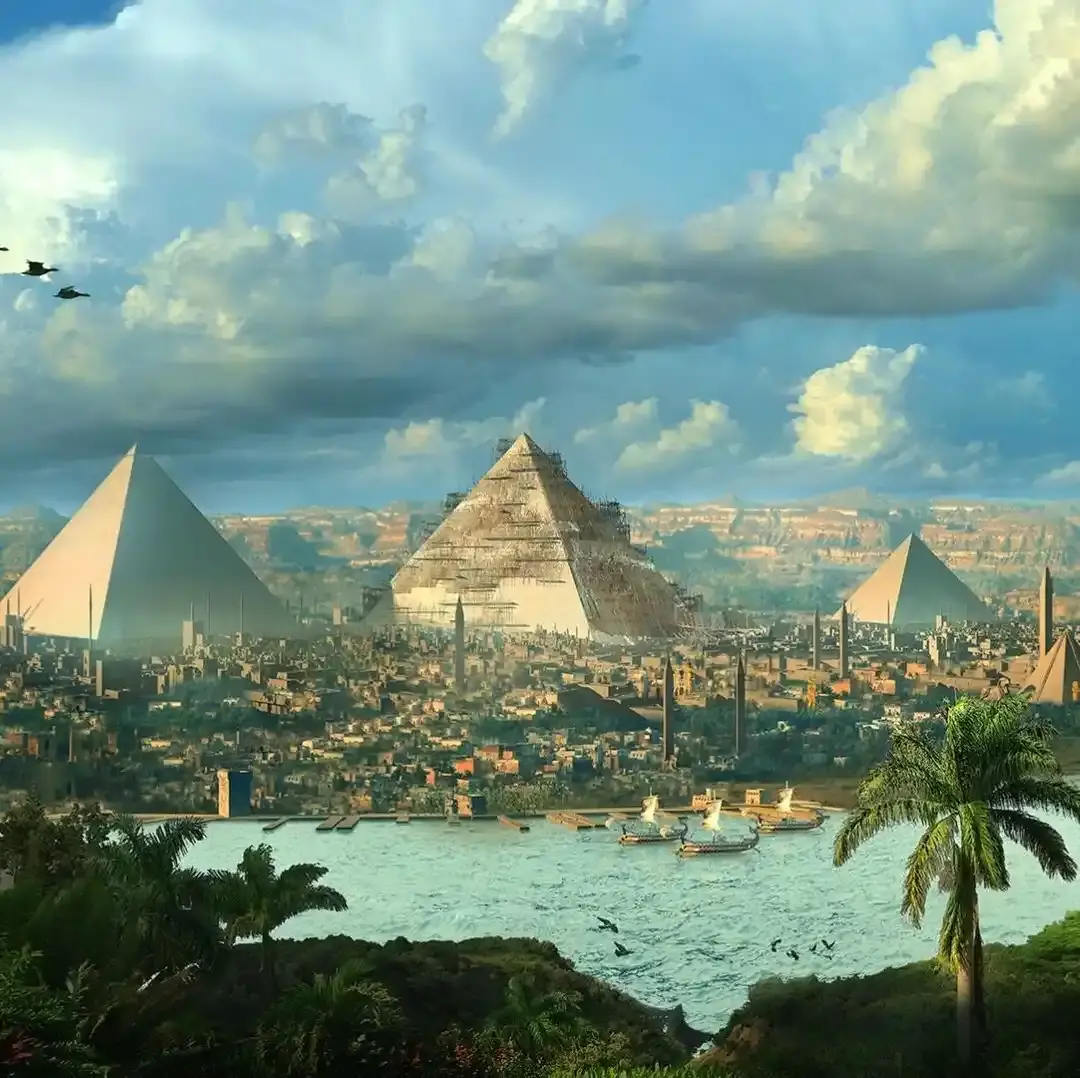
Egypt Ancient Civilization: Where Thousands of Years of History Begin
Egypt Ancient Civilization represents one of humanity’s most remarkable historical achievements. For more than 3,000 years, communities along the Nile River developed a powerful culture with its own government, writing system, religious traditions, artistic styles, and architectural achievements.
Today, travelers can still experience this extraordinary legacy across Egypt. The pyramids of Giza rise above the desert, magnificent temples line the Nile Valley, and royal tombs preserve colorful scenes from the lives of ancient rulers.
However, the story of Egypt extends far beyond pyramids and pharaohs. It includes periods of political unity, internal conflict, military expansion, religious transformation, foreign influence, and cultural development.
This guide follows the major stages of Egyptian history. Along the way, it explores the people, monuments, beliefs, and achievements that transformed the Nile Valley into one of the world’s greatest ancient civilizations.
Why the Nile Created the Foundations of Egyptian Civilization
The story begins with the Nile River.
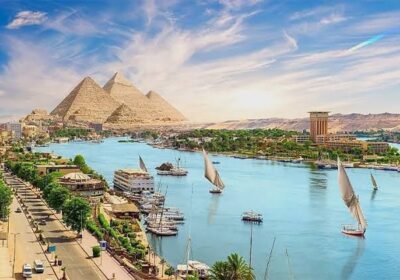
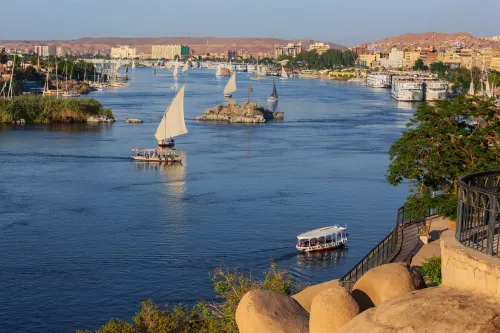
Unlike the surrounding desert, the Nile Valley offered water and fertile land. Each year, seasonal flooding deposited rich soil along the riverbanks. As a result, early communities could cultivate crops and establish more permanent settlements.
The river also provided a natural transportation route. Boats could carry agricultural products, stone, people, and other goods between different regions.
Furthermore, the Nile connected communities that were separated by long distances. This geographical advantage helped political and economic networks develop over time.
Eventually, larger settlements emerged. Local rulers gained influence, administrative systems became more sophisticated, and the foundations of a unified Egyptian state began to appear.
The Unification of Ancient Egypt
Before a unified kingdom existed, the Nile Valley contained different political communities.
Around the beginning of the dynastic period, Upper and Lower Egypt were brought together under centralized rule, traditionally associated with King Narmer.
This was a crucial turning point. A unified state could organize agriculture, taxation, religious institutions, military activities, and large construction projects on a much greater scale.
The pharaoh became both a political ruler and an important religious figure. Consequently, royal authority became closely connected with the religious beliefs that shaped Egyptian society.
The beginning of dynastic Egypt therefore established the political structure that would support successive generations of rulers.
The Old Kingdom and the Age of the Pyramids
The Old Kingdom is perhaps the most recognizable period in Egypt Ancient Civilization.
During this era, Egyptian rulers developed monumental architecture on an unprecedented scale. The Step Pyramid of Djoser at Saqqara represented an important stage in the evolution of pyramid construction.
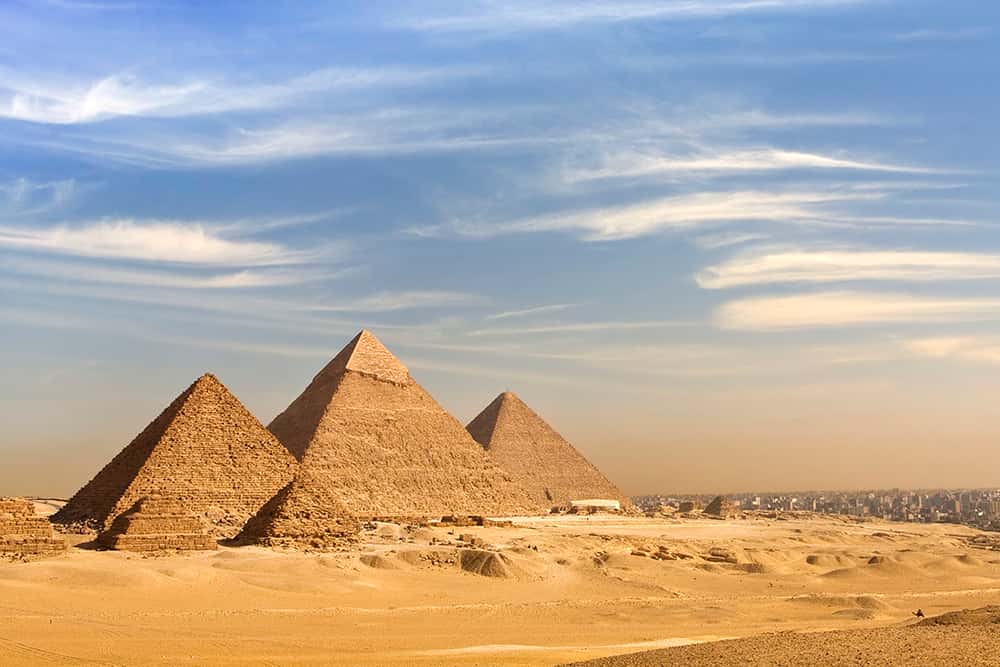
Later, the Fourth Dynasty produced the magnificent pyramids of Giza:
- Great Pyramid of Khufu
- Pyramid of Khafre
- Pyramid of Menkaure
- Great Sphinx of Giza
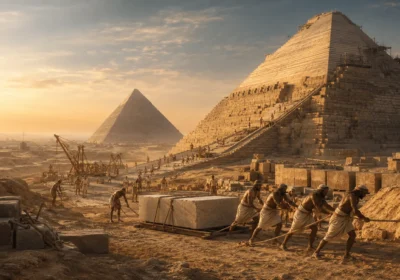
The Great Pyramid became the largest and most ambitious of the group. Moreover, its construction required extensive quarrying, transportation, surveying, engineering, and workforce organization.
These monuments demonstrate that pyramid construction was not the result of one invention. Instead, it depended on thousands of workers and generations of accumulated practical knowledge.
The Middle Kingdom: Egypt Reunited
The Old Kingdom eventually declined, and Egypt experienced a period of political division.
Eventually, strong rulers reunified the country, beginning the Middle Kingdom. This era became associated with political stability, economic development, military expansion, and cultural achievement.
Egyptian rulers expanded their influence into Nubia while strengthening the country’s administrative structure.
Literature also flourished during this period. Stories, teachings, and official texts provide valuable evidence about Egyptian society and the ideas of its people.
At the same time, architects and craftsmen continued developing temples, tombs, statues, and other monuments.
The Middle Kingdom is therefore an important reminder that Egyptian history was not simply a continuous period of royal prosperity. Political challenges were followed by recovery and renewed cultural development.
The New Kingdom: The Golden Age of Egypt
The New Kingdom is often considered the golden age of Egypt Ancient Civilization.
During this period, Egypt became a powerful regional state. Its rulers expanded Egyptian influence, accumulated considerable wealth, and commissioned some of the country’s most impressive monuments.
Several famous pharaohs ruled during this era, including:
- Hatshepsut
- Thutmose III
- Amenhotep III
- Akhenaten
- Tutankhamun
- Seti I
- Ramses II
Meanwhile, Thebes became an important religious and political center. Massive temple complexes expanded on the eastern side of the Nile, while royal tombs were constructed in the mountains on the western bank.
Many of the attractions that define modern Luxor tourism therefore have their roots in this extraordinary period.
Hatshepsut and the Rise of a Powerful Queen
Hatshepsut stands among the most remarkable rulers in Egyptian history.
She promoted trade, commissioned ambitious building projects, and developed a powerful royal image. Her mortuary temple at Deir el-Bahari remains one of the architectural highlights of Luxor.
The temple is built against a dramatic limestone cliff. As a result, the structure combines natural scenery with carefully planned terraces, columns, statues, and religious decoration.
Her reign also demonstrates that women could exercise significant political authority within the Egyptian royal system.
Akhenaten and a Dramatic Religious Transformation
Another fascinating chapter came during the reign of Akhenaten.
The pharaoh promoted the worship of the Aten and established a new royal capital at Akhetaten, now known as Amarna.
His religious reforms challenged established traditions and changed the artistic style of the royal court.
However, the transformation did not last permanently. After Akhenaten’s death, traditional religious practices were gradually restored.
Today, the Amarna period remains one of the most closely studied episodes in Egyptian history because it reveals how religion, politics, art, and royal authority could influence one another.
Tutankhamun and the Discovery That Changed Egyptology
Tutankhamun became internationally famous because of the discovery of his royal tomb.
Howard Carter discovered the tomb in the Valley of the Kings in 1922. Remarkably, many objects remained inside, providing researchers with an extraordinary collection of royal funerary artifacts.
The discovery generated worldwide interest in Ancient Egypt. Golden objects, furniture, jewelry, statues, and ceremonial items revealed the craftsmanship and wealth associated with Egyptian royal burials.
Although Tutankhamun ruled for only a short period, his tomb became one of the most important archaeological discoveries of the modern era.
Ramses II and Monumental Royal Power
Ramses II was one of the longest-reigning and most celebrated pharaohs of Ancient Egypt.
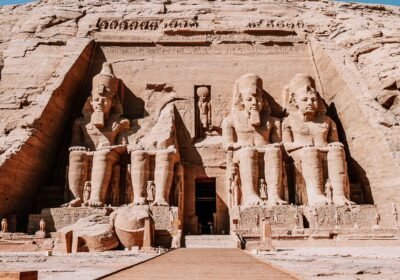
He commissioned monuments throughout Egypt and Nubia. His reign is especially associated with monumental architecture, including the temples of Abu Simbel.
The enormous seated statues at Abu Simbel communicate an unmistakable sense of royal power.
In addition, Ramses II used inscriptions and monuments to record military achievements, religious devotion, and his relationship with the gods.
His legacy demonstrates how architecture could function as both a religious expression and a statement of political authority.
Ancient Egyptian Temples and Religious Life
Religion was deeply connected with everyday life in Egypt Ancient Civilization.
Egyptians worshipped numerous deities, including Ra, Amun, Osiris, Isis, Horus, Anubis, and many others.
Temples served as important religious and administrative institutions. Priests performed rituals, offerings were presented to the gods, and rulers commissioned new buildings to demonstrate their devotion.
Some of the most important surviving temples include:
- Karnak Temple
- Luxor Temple
- Edfu Temple
- Kom Ombo Temple
- Philae Temple
- Dendera Temple
- Abydos Temple
- Abu Simbel
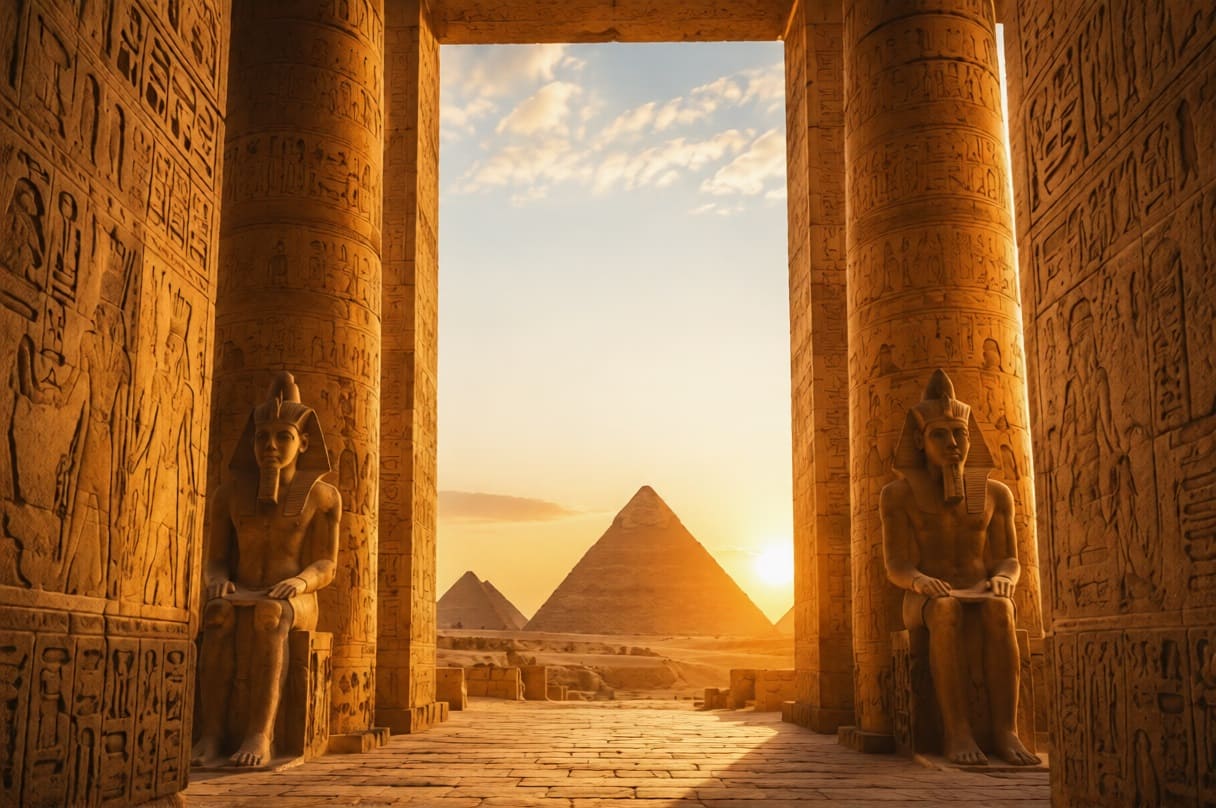
Furthermore, temple walls preserve inscriptions and reliefs that reveal information about Egyptian mythology, rulers, ceremonies, and religious beliefs.
The Valley of the Kings and Egyptian Burial Traditions
The belief in an afterlife had a profound influence on Egyptian culture.
Pharaohs and other members of the elite were buried with objects, inscriptions, and religious imagery intended to support them in the next world.
During the New Kingdom, many royal tombs were constructed in the Valley of the Kings rather than inside large pyramids.
The tombs were cut into the limestone mountains and decorated with colorful scenes and religious texts.
Today, the Valley of the Kings is one of the most important historical attractions in Luxor. Visitors can descend underground and see the extraordinary artistic traditions preserved on the walls.
Daily Life Beyond the Pharaohs
Understanding Egypt Ancient Civilization also means looking beyond royal families.
Most Egyptians lived ordinary lives as farmers, craftsmen, merchants, soldiers, priests, laborers, or administrators.
Farmers depended heavily on the Nile and agricultural cycles. Craftsmen produced pottery, jewelry, furniture, tools, textiles, and other goods.
Scribes were especially important because writing was essential for administration. They recorded taxes, supplies, legal matters, religious texts, and other information.
Therefore, archaeological evidence from homes, workshops, settlements, and burial sites provides an important picture of everyday Egyptian society.
Hieroglyphics and the Egyptian Writing System
One of the greatest achievements of Egyptian civilization was its sophisticated writing tradition.
Hieroglyphic inscriptions appear on temples, tombs, statues, monuments, and religious objects. Egyptians also used other forms of writing for administrative and everyday purposes.
The Rosetta Stone later became crucial to modern Egyptology because its inscriptions helped scholars understand Egyptian scripts.
As a result, researchers could begin reading thousands of ancient inscriptions and reconstruct important parts of Egyptian history.
Without the decipherment of these texts, our understanding of Egyptian religion, government, literature, and royal history would be far more limited.
The Ptolemaic Period and Cleopatra
Egypt continued to change long after the great pharaohs of the New Kingdom.
Alexander the Great conquered Egypt in 332 BC. Later, the Ptolemaic Dynasty ruled the country and created a fascinating blend of Greek and Egyptian traditions.
Alexandria became a major center of culture, scholarship, and commerce.
The dynasty’s final ruler was Cleopatra VII. Eventually, Egypt became part of the Roman world following Cleopatra’s death in 30 BC.
This marked the end of the traditional pharaonic era, although Egyptian culture and religious traditions continued to influence the country for centuries.
Where to Experience Egypt’s Ancient History Today
Modern travelers can explore different chapters of Egypt Ancient Civilization across several destinations.
Cairo and Giza
The Cairo area provides access to:
- Great Pyramid of Giza
- Great Sphinx
- Saqqara
- Memphis
- Egyptian Museum
- Grand Egyptian Museum
Luxor
Luxor is particularly important for travelers interested in the New Kingdom.
Key attractions include:
- Valley of the Kings
- Karnak Temple
- Luxor Temple
- Temple of Hatshepsut
- Medinet Habu
- Valley of the Queens
Aswan
Further south, Aswan offers:
- Philae Temple
- Abu Simbel
- Unfinished Obelisk
- Nubian Museum
Other Historical Destinations
Dendera, Abydos, Edfu, and Kom Ombo add further chapters to Egypt’s long historical story.
For this reason, combining Cairo, Luxor, and Aswan provides an excellent introduction to the country’s ancient heritage.
Why Egypt’s Ancient Civilization Still Fascinates Travelers
The enduring appeal of Egypt Ancient Civilization comes from its extraordinary combination of age, preservation, architecture, religion, and human achievement.
The pyramids demonstrate monumental engineering. The temples reveal sophisticated religious traditions. The royal tombs preserve ancient art, while inscriptions provide direct evidence of Egyptian thought and government.
Most importantly, Egypt allows travelers to experience this history in person.
You can stand before monuments built thousands of years ago, walk through ancient temples, explore underground tombs, and follow the Nile routes that connected Egyptian communities.
That physical connection makes Egypt different from simply reading about an ancient civilization in a book.
Frequently Asked Questions
How long did Ancient Egyptian civilization last?
The pharaonic civilization lasted for more than 3,000 years, beginning around the unification of Egypt and continuing through numerous dynasties before the country became part of the Roman Empire.
Why was the Nile important to Ancient Egypt?
The Nile provided water, fertile farmland, transportation, and essential resources. Consequently, it became the foundation of Egyptian agriculture, settlement, trade, and economic development.
What is the most famous monument of Ancient Egypt?
The Great Pyramid of Giza is the most famous Egyptian monument and the only surviving Wonder of the Ancient World.
Which period is considered Ancient Egypt’s golden age?
The New Kingdom is commonly regarded as a golden age because Egypt became a powerful regional state and produced many of its most famous rulers and monuments.
Where can tourists see the best Ancient Egyptian monuments?
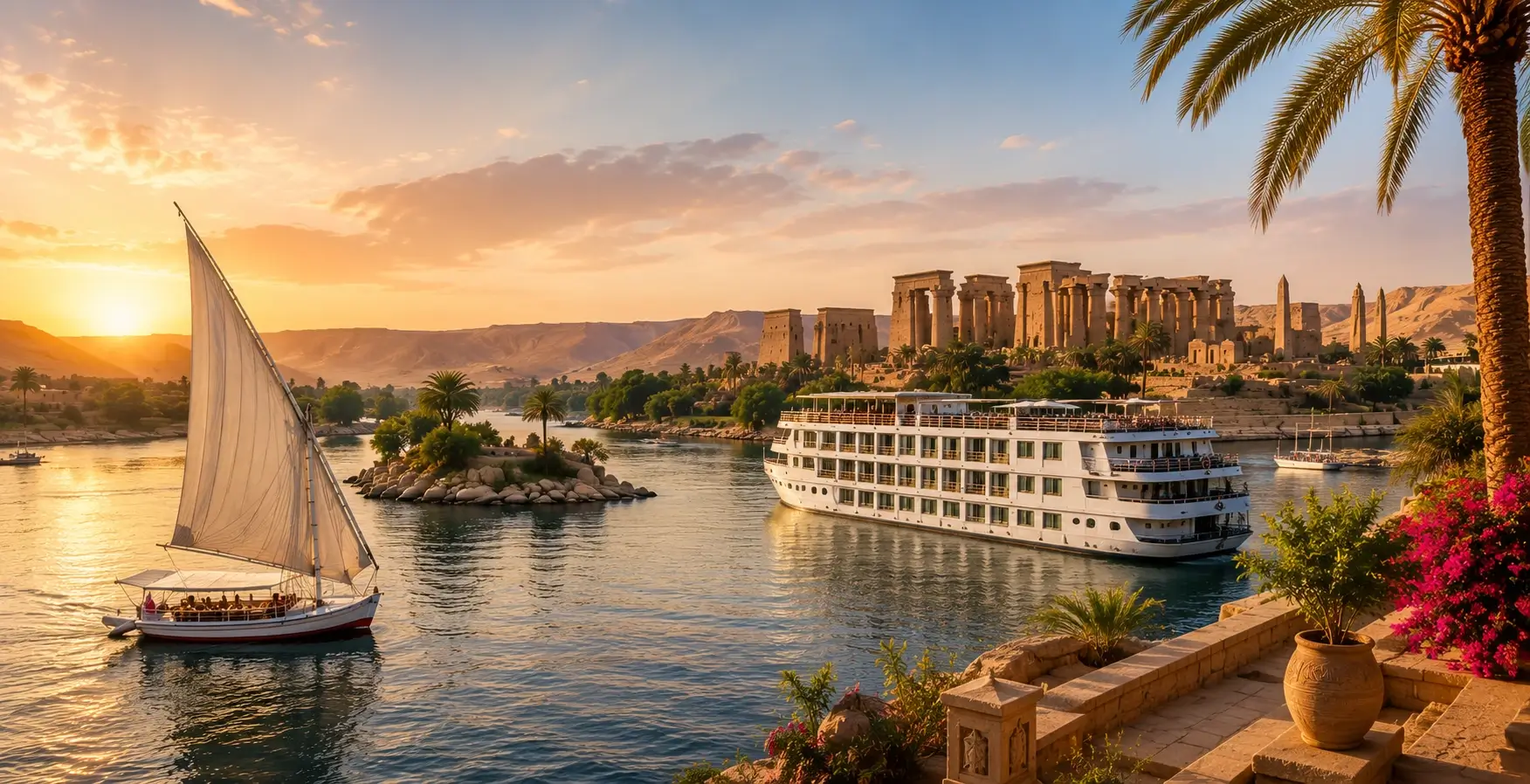
Cairo and Giza, Luxor, and Aswan contain some of the country’s most important historical attractions. In addition, a Nile cruise between Luxor and Aswan provides access to several major temples.
Conclusion
Egypt Ancient Civilization tells the story of a society that developed along the Nile and continued to evolve for thousands of years. From the first unified kingdom and the pyramid builders to the powerful rulers of the New Kingdom, each era contributed another chapter to Egypt’s extraordinary legacy.
The story did not end with the last pharaohs. Greek, Roman, Christian, and later Islamic periods added new layers to the country’s remarkable history.
Today, however, the monuments of Ancient Egypt remain among the world’s greatest historical treasures.
Whether you explore the pyramids of Giza, descend into the Valley of the Kings, admire Karnak Temple, or stand before the colossal statues of Abu Simbel, you are experiencing tangible evidence of a civilization that shaped human history.
That is the enduring power of Egypt: thousands of years later, its ancient world is still waiting to be explored.